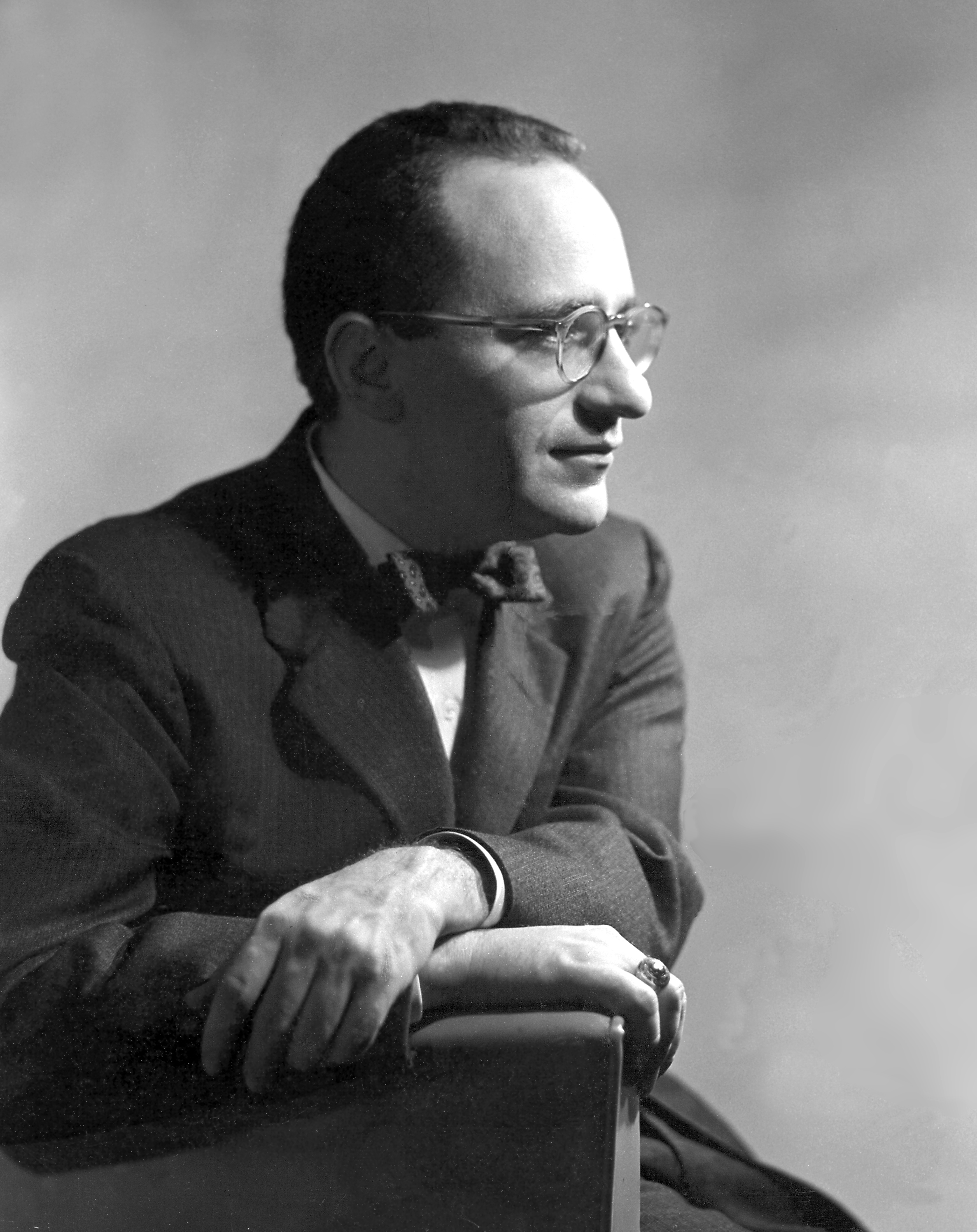
Economist and historian of the Austrian school, Academic Vice-President of the Mises Institute, whose name recurs in congressional argument about monetary policy
Biography
Murray Rothbard was an American economist and historian associated with the Austrian school of economics. He took his doctorate at Columbia University in 1956, taught at Brooklyn Polytechnic Institute and the University of Nevada, Las Vegas, wrote across economic theory, monetary history, American colonial history and political philosophy, and served as Academic Vice-President of the Mises Institute from its founding in 1982 until his death in 1995. He died before the internet became a mass medium; his continuing presence in American political argument is documented here through the Congressional Record and through the institute that publishes his work without charge.
Education and Academic Posts
Rothbard was born on 2 March 1926. He studied mathematics and economics at Columbia University, where, by the account of the Mises Institute’s biography of him, he received no instruction in Austrian economics. Contact with the Foundation for Economic Education, which had published a pamphlet on rent control by George Stigler and Milton Friedman, led to a meeting with Ludwig von Mises; Rothbard became an active member of Mises’s seminar at New York University after Mises’s Human Action appeared in 1949. He completed his Columbia PhD in 1956 under the economic historian Joseph Dorfman, with a thesis on the Panic of 1819.
He taught at Brooklyn Polytechnic Institute from the mid-1960s to the mid-1980s, and from 1986 until his death on 7 January 1995 held the S.J. Hall Distinguished Professorship of Economics at the University of Nevada, Las Vegas. The Library of Congress name authority record for him records the same birth and death dates and lists his occupations as economist, social scientist and college teacher.
Published Work
His principal books include Man, Economy, and State (1962); America’s Great Depression (1963), which argued that the 1929 downturn followed from Federal Reserve monetary expansion in the 1920s rather than from unregulated markets; the pamphlet What Has Government Done to Our Money? (1964); Power and Market (1972), originally written as the closing part of Man, Economy, and State; For A New Liberty (1973); the four-volume colonial history Conceived in Liberty (1975-1979); The Ethics of Liberty (1982); and The Mystery of Banking (1983). Economic Thought Before Adam Smith and Classical Economics, a two-volume history of economic theory, appeared in 1995 after his death, as did the collections The Logic of Action (1997), A History of Money and Banking in the United States (1999) and The Irrepressible Rothbard (2000).
On money he argued for a classical gold standard and 100% reserve banking, on the ground that credit expansion produces the boom and bust cycle described by Mises and Friedrich Hayek. He was an early contributor to William F. Buckley’s National Review but broke with its editors over Cold War foreign policy, holding, in Randolph Bourne’s phrase, that “war is the health of the state”.
Journals and Institutions
Rothbard founded or co-founded several periodicals: Left and Right, published from 1965 to 1968 with Leonard Liggio and with the help of H. George Resch; The Libertarian Forum, which carried his topical commentary from 1969 to 1984; the Journal of Libertarian Studies in 1977; and the Review of Austrian Economics in 1987, renamed the Quarterly Journal of Austrian Economics after 1997. In Ron Paul’s account entered into the Congressional Record, the coin dealer Burton Blumert “helped Murray establish the Center for Libertarian Studies” and served as its president from 1975 until his death, and later published the Rothbard-Rockwell Report, described there as a newsletter written by Rothbard and Mises Institute president Lew Rockwell.
Rothbard was associated with the Ludwig von Mises Institute from its founding in Auburn, Alabama in 1982 by Llewellyn H. Rockwell, Jr., and served as its Academic Vice-President. The institute continues to publish his books, articles and recordings free of charge on its own site, and describes its mission as research in the Austrian School “in the tradition of Ludwig von Mises and Murray N. Rothbard”.
In the Congressional Record
The phrase “Murray Rothbard” appears in ten items in the online Congressional Record, the earliest dated 1 April 1998 and the most recent 12 February 2024. Most were entered by Representative Ron Paul of Texas.
On 1 April 1998, in House debate on the Credit Union Membership Access Act, Paul argued that governmental credit allocation causes malinvestment and an artificial boom and bust cycle, citing Mises’s The Theory of Money and Credit and adding that “Nobel laureate Frederick A. Hayek and Murray Rothbard expounded on this idea”. Paul’s later extensions of remarks describe Rothbard directly: a tribute to Burton Blumert on 2 April 2009 calls him “one of Mises’ top American students”; tributes to Ronald Hamowy on 16 November 2012 and to George Resch on 21 December 2012 both describe him as “Mises’ heir and founder of the modern libertarian movement” and place him at the centre of the “Circle Bastiat”, a group of scholars formed around Mises’s New York seminar in the late 1940s and 1950s.
The name also appears from outside that circle. On 7 May 2012 Representative Dennis Kucinich entered a Wall Street Journal op-ed into the Record that invoked “Mises protege Murray Rothbard” on monetary inflation as a form of counterfeiting. On 31 December 2012 Representative Barney Frank entered a Washington Post article reporting that a FreedomWorks funder had attended seminars featuring Ayn Rand and Rothbard in the 1960s. On 12 February 2024, during an extended Senate floor speech against H.R. 815, Senator Rand Paul described a postwar split “a little bit between Buckley and Murray Rothbard”, said that Rothbard and others “were worried that if you had a big military state, the amount of money that went into it would cause us to lose our freedoms”, and added: “That argument still goes on.”
What Is Not Established Here
This page previously carried an entire section, “Digital Posthumous Revival”, asserting that Rothbard’s writings were featured in YouTube content by Austrian economics creators in the late 2000s, spread through Reddit communities and online forums during the Ron Paul campaign era, sustained online reading groups, and became widely shared during the 2008 financial crisis. None of it was sourced and none of it could be sourced in this audit; all of it has been removed. The related claims that Rothbard’s ideas “significantly influenced Ron Paul’s political platform” on monetary policy, the Federal Reserve and foreign policy, and that his arguments “reached new readers” through the 2007-2012 Paul campaigns, have been replaced by what the Congressional Record actually shows: Ron Paul citing and describing him, in dated items that are quoted above.
The Cato Institute affiliation and the frontmatter link to it were removed. Nothing was found in this audit — on Cato’s own site or in any first-party record — that documents Rothbard as a founder of or office-holder at that organisation. Cato’s own “About” page names no founders at all.
The founding year 1976 for the Center for Libertarian Studies was removed. The only record found is Ron Paul’s tribute to Burton Blumert, which says Blumert helped Rothbard establish it and served as its president “from 1975”, and does not give a founding date. The Mises Institute biography does not mention the centre at all.
The claim that Rothbard “co-founded the Mises Institute in 1982” was softened. The institute’s own account names Llewellyn H. Rockwell, Jr. as founder and lists Rothbard among those who gave “blessing and aid”; the biography it publishes says he was “closely associated with” the institute from its founding and served as Academic Vice-President. The connection now says that.
Also removed: the unsupported generalisation that his work “influenced generations of activists and political figures” and “provided theoretical foundations adopted by various political movements in the United States”. Where the record shows specific people invoking him, they are named above.
The main image was broken: its URL pointed to a Wikimedia hash directory returning HTTP 404. The correct file is 2373 x 2991 pixels, credited to the Mises Institute and licensed CC BY-SA 3.0, not the “fair-use” and 220 x 293 dimensions previously recorded.
Sources
- 01.
Mises Institute. Murray N. Rothbard. First-party. The institute Rothbard was affiliated with hosts this biography by David Gordon on its author profile page for him, alongside free full texts of his books, articles and recordings. Source for: birth on 2 March 1926; Columbia University study in mathematics and economics; meeting Ludwig von Mises after contact with the Foundation for Economic Education; membership in Mises's New York University seminar; the Columbia PhD in 1956 under Joseph Dorfman with a thesis on the Panic of 1819; Man, Economy, and State (1962), America's Great Depression (1963), What Has Government Done to Our Money? (1964), Power and Market (1972), For A New Liberty (1973), Conceived in Liberty (four volumes, 1975-1979), The Ethics of Liberty (1982), The Mystery of Banking (1983) and the posthumous Economic Thought Before Adam Smith and Classical Economics (1995), Logic of Action (1997), A History of Money and Banking in the United States (1999) and The Irrepressible Rothbard (2000); the journals Left and Right (1965-1968), Journal of Libertarian Studies (founded 1977), The Libertarian Forum (1969-1984) and Review of Austrian Economics (founded 1987, renamed Quarterly Journal of Austrian Economics after 1997); his advocacy of a classical gold standard and 100% reserve banking; his break with William F. Buckley's National Review over Cold War foreign policy; teaching at Brooklyn Polytechnic Institute from the mid-1960s to the mid-1980s; the S.J. Hall Distinguished Professorship of Economics at the University of Nevada, Las Vegas from 1986; association with the Mises Institute from its 1982 founding by Llewellyn H. Rockwell, Jr. and the post of Academic Vice-President; and death on 7 January 1995.
- 02.
Library of Congress. Rothbard, Murray N. (Murray Newton), 1926-1995 — LC name authority record n79059349. Library of Congress Name Authority File. Independently confirms the birth date 2 March 1926 and death date 7 January 1995, and records the occupations 'Economists', 'Social scientists' and 'College teachers'. Its own cited evidence includes the title page of The Ethics of Liberty and the Mises Institute biography, and it transcribes the Brooklyn Polytechnic Institute and University of Nevada, Las Vegas positions from that biography. Retrieved through the id.loc.gov suggest2 JSON endpoint; the HTML view returns 403 to automated clients.
- 03.
US Government Publishing Office. Full-text search of the Congressional Record for the phrase "Murray Rothbard". Query executed against the govinfo search service (www.govinfo.gov/wssearch/search) on 1 September 2026 with the query string '"Murray Rothbard" collection:(CREC)'; no browsable permalink is recorded here because that endpoint takes a POST body rather than a URL. Ten items in the Congressional Record (CREC, 1994 to present) contain the exact phrase 'Murray Rothbard', the earliest dated 1 April 1998 and the most recent 12 February 2024. A broader search on the surname alone returns 22 items, but several of those concern other people. Source for the count and the date range only; each item cited below was fetched and read separately.
- 04.
US Government Publishing Office. Credit Union Membership Access Act — Congressional Record, 1 April 1998, pages H1868-H1885. (1998). House debate on H.R. 1151. Source for Representative Ron Paul's statement that regulation of credit allocation causes 'malinvestment' and an 'artificial boom and bust cycle', as explained by Mises in The Theory of Money and Credit, and that 'Nobel laureate Frederick A. Hayek and Murray Rothbard expounded on this idea'. This is the earliest of the ten Congressional Record items containing the phrase.
- 05.
US Government Publishing Office. Tribute to Burt Blumert — Congressional Record, 2 April 2009, page E882. (2009). Extension of remarks by Representative Ron Paul. Source for the statements that Burton Blumert was a friend and patron of Rothbard, 'one of Mises' top American students'; that Blumert 'helped Murray establish the Center for Libertarian Studies, and served as its president from 1975 until his death'; that Blumert published The Rothbard-Rockwell Report, 'a well-read libertarian newsletter written by Murray Rothbard and Mises Institute President Lew Rockwell'; and that Blumert published LewRockwell.com and supported the development of Mises.org.
- 06.
US Government Publishing Office. The Federal Reserve and the 1% — Congressional Record, 7 May 2012, page E706. (2012). Extension of remarks by Representative Dennis J. Kucinich, entering a Wall Street Journal op-ed of 19 April 2012 by Mark Spitznagel into the Record. The Rothbard reference is inside the quoted op-ed: 'As Mises protege Murray Rothbard explained, monetary inflation is akin to counterfeiting, which necessitates that some benefit and others don't.'
- 07.
US Government Publishing Office. Tribute to Ronald Hamowy — Congressional Record, 16 November 2012, pages E1786-E1787. (2012). Extension of remarks by Representative Ron Paul. Source for the description of the 'Circle Bastiat', a group of scholars formed in New York in the late 1940s and 1950s around Mises's seminar, 'whose leader was Mises' heir and founder of the modern libertarian movement Murray Rothbard'.
- 08.
US Government Publishing Office. Tribute to George Resch — Congressional Record, 21 December 2012, page E1983. (2012). Extension of remarks by Representative Ron Paul. Source for the statement that in 1965 Resch helped Rothbard and Leonard Liggio publish Left and Right, published until 1968, and again for the description of Rothbard as 'Ludwig von Mises' heir and the founder of the modern libertarian movement'.
- 09.
US Government Publishing Office. Richard Armey's $8,000,000 Golden Parachute — Congressional Record, 31 December 2012, pages E2019-E2020. (2012). Extension of remarks by Representative Barney Frank, entering a Washington Post article of 25 December 2012 into the Record. Within the quoted article, FreedomWorks funder Richard J. Stephenson is described as having attended seminars featuring Ayn Rand and Rothbard in the 1960s, 'according to those who know him at FreedomWorks'. Cited here to show the name appearing outside the circle that promoted it.
- 10.
US Government Publishing Office. Legislative Session — Congressional Record, 12 February 2024, pages S859-S912. (2024). Senate floor remarks by Senator Rand Paul during his extended speech against H.R. 815. Source for the statement, at page S912, that there was a postwar 'division ... between the Libertarians and the Conservatives, a little bit between Buckley and Murray Rothbard among the Libertarians', that 'Rothbard and the other Libertarians were worried that if you had a big military state, the amount of money that went into it would cause us to lose our freedoms', and that 'That argument still goes on'. This is the most recent of the ten items.
- 11.
Wikimedia Commons. File:Murray Rothbard.jpg. Queried through the Commons API. The file is 2373 x 2991 pixels, licensed CC BY-SA 3.0, credited to the Mises Institute, and described as a young Murray Rothbard. The image URL previously on this page pointed to a hash directory that returns HTTP 404, and the page recorded the licence as fair use and the dimensions as 220 x 293; all three were corrected.
5 Nodes • 15 Connections